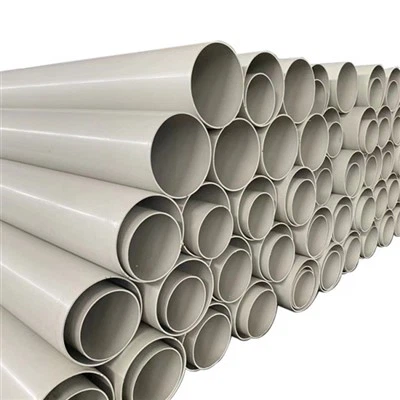
Hey there! I'm a supplier of PP pipes, and today I'm gonna take you on a journey through the manufacturing process of these super - useful pipes.
Raw Material Selection
The first step in making PP pipes is choosing the right raw materials. Polypropylene (PP) is the main ingredient. It comes in different grades, and we carefully select the grade that suits the specific requirements of the pipes we're making. For example, if we're making pipes for outdoor use, we'll pick a grade that has better UV - resistance. That's where our PP UV - Resistant Pipe comes in. This grade of PP can withstand the harsh sun rays and won't degrade as quickly as regular PP.
Mixing and Additives
Once we've got the right PP grade, we start mixing it with additives. These additives serve various purposes. Some are used to improve the pipe's strength, while others enhance its flexibility. We might also add colorants to give the pipes a specific look. For instance, if we're making pipes for a specific project that requires a certain color, we'll add the appropriate colorant during this mixing process. It's like baking a cake, where you add different ingredients to get the perfect taste and texture.
Extrusion
The heart of the PP pipe manufacturing process is extrusion. We feed the mixed PP material into an extruder. The extruder is a big machine that heats the PP to a molten state. As the molten PP moves through the extruder, it passes through a die. The die is a specially designed tool that gives the pipe its shape. Depending on the type of pipe we're making, the die can be adjusted to create different diameters and wall thicknesses.
For example, if we're making PP Ducting, the die will be set to create a larger - diameter pipe with a specific wall thickness suitable for ventilation and air - handling applications. The extrusion process is continuous, and the pipe comes out of the die in a long, continuous length.
Cooling
As soon as the pipe comes out of the die, it needs to be cooled down. We use a cooling tank filled with water to rapidly cool the hot, molten pipe. This cooling process is crucial because it helps the pipe maintain its shape and strength. If the pipe cools too slowly, it might deform or develop internal stresses. On the other hand, if it cools too quickly, it could become brittle. So, we carefully control the cooling process to ensure the best quality.
Sizing and Cutting
After the pipe is cooled, we move on to sizing and cutting. We use sizing equipment to make sure the pipe has the exact diameter and wall thickness as specified. This is important because pipes need to fit together properly during installation. Once the pipe is sized, we cut it into the desired lengths. For our PP Coil, we might cut the pipe into long lengths and then wind it into coils for easy storage and transportation.
Quality Control
Quality control is an essential part of the manufacturing process. We conduct various tests on the pipes to ensure they meet the required standards. We check the pipe's dimensions, strength, and chemical properties. For example, we might perform a pressure test to see how much pressure the pipe can withstand without bursting. We also check for any surface defects, such as cracks or scratches. Only pipes that pass all these tests are sent out for sale.
Packaging and Storage
Once the pipes pass the quality control tests, we package them for storage and transportation. We use different types of packaging materials, such as plastic wraps or cardboard boxes, depending on the type and size of the pipes. Proper packaging helps protect the pipes from damage during handling and shipping. We also store the pipes in a dry and cool place to prevent any degradation.
Why Choose Our PP Pipes
Our PP pipes are made with the highest quality materials and the latest manufacturing techniques. We've been in the business for a long time, and we know what it takes to make reliable and durable pipes. Whether you need pipes for water supply, drainage, or industrial applications, we've got you covered. Our PP UV - Resistant Pipe is perfect for outdoor use, and our PP Ducting is great for ventilation systems.


If you're in the market for high - quality PP pipes, we'd love to hear from you. We can provide you with detailed information about our products, offer competitive prices, and answer any questions you might have. Don't hesitate to reach out to us for a procurement discussion. We're here to help you find the best PP pipe solutions for your needs.
References
- "Plastics Extrusion Technology" by Allan A. Griff
- "Handbook of Polypropylene and Polypropylene Composites" by Harish Kumar