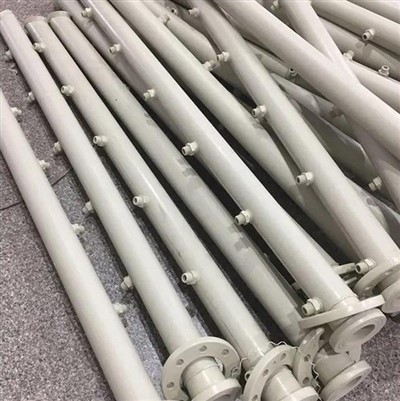
Does a PP Conductive Tee have good UV resistance?
As a supplier of PP Conductive Tee, I often encounter inquiries about the UV resistance of our products. This is a crucial aspect, especially for those applications where the pipes are exposed to sunlight.
PP, or polypropylene, is a widely used thermoplastic polymer known for its excellent chemical resistance, high strength, and relatively low cost. When it comes to conductive PP products like the PP Conductive Tee, they are designed to prevent the build - up of static electricity, which is essential in many industrial settings.
Understanding UV Resistance
UV radiation from the sun can have a significant impact on polymers. Over time, exposure to UV rays can cause the polymer chains to break down, leading to a range of issues such as discoloration, embrittlement, and a reduction in mechanical properties. For pipes, this can result in cracks, leaks, and a shorter service life.
The UV resistance of a material depends on several factors. One of the key factors is the presence of additives. Many polymers are formulated with UV stabilizers, which can absorb or reflect UV radiation, protecting the polymer chains from damage. Another factor is the thickness of the material. Thicker parts generally have better UV resistance as the outer layer can act as a shield for the inner layers.
UV Resistance of PP Conductive Tee
The base material, polypropylene, has relatively poor natural UV resistance. Without proper protection, PP can degrade when exposed to sunlight for extended periods. However, in our manufacturing process of PP Conductive Tee, we take several measures to enhance its UV resistance.
First, we add high - quality UV stabilizers to the PP resin. These stabilizers work in different ways. Some absorb the UV energy and convert it into heat, which is then dissipated. Others act as free - radical scavengers, preventing the formation of reactive species that can damage the polymer chains. By carefully selecting the type and amount of UV stabilizers, we can significantly improve the long - term UV resistance of our PP Conductive Tee.


Second, we control the manufacturing process to ensure a consistent wall thickness. A uniform thickness helps in providing an even level of protection against UV radiation throughout the tee. If the wall thickness varies, the thinner areas may be more susceptible to UV damage.
In addition, we conduct extensive testing on our products to evaluate their UV resistance. We use accelerated aging chambers that simulate long - term sun exposure in a relatively short period. These tests involve exposing samples of PP Conductive Tee to high - intensity UV light for a set number of hours. After the test, we examine the samples for changes in appearance, such as color fading or surface cracking, and measure their mechanical properties, like tensile strength and impact resistance.
Applications and UV Exposure
The PP Conductive Tee is used in a variety of applications. In some industrial settings, the pipes are installed indoors, where they are not exposed to direct sunlight. In these cases, UV resistance is not a major concern. However, there are also many outdoor applications, such as in chemical processing plants, water treatment facilities, and agricultural irrigation systems.
In outdoor applications, the level of UV exposure can vary depending on the location. Areas closer to the equator receive more intense UV radiation than those at higher latitudes. Also, the time of year and the orientation of the pipes can affect the amount of sunlight they receive. For example, pipes that face south in the northern hemisphere will receive more sunlight throughout the day compared to those facing north.
Despite the enhanced UV resistance of our PP Conductive Tee, it is still recommended to take some additional precautions in outdoor applications. One option is to use protective coatings or wrapping materials. These can provide an extra layer of protection against UV rays. Another approach is to install the pipes in areas where they are partially shaded, or to use structures such as canopies or shields to reduce direct sunlight exposure.
Comparing with Other Products
When comparing the UV resistance of PP Conductive Tee with other conductive pipe fittings, such as PP Conductive Flange and PP Conductive Elbow, the basic principles of UV protection are similar. All these products are made from conductive PP and are treated with UV stabilizers.
However, the shape and size of the fittings can affect their UV resistance. For example, a tee may have more surface area exposed to sunlight compared to a flange, which could potentially make it more vulnerable to UV damage. But our manufacturing process ensures that all our products, regardless of their shape, have a high level of UV resistance.
Conclusion
In conclusion, our PP Conductive Tee has good UV resistance due to the addition of UV stabilizers and strict manufacturing process control. While it can withstand outdoor exposure, taking additional protective measures is advisable for long - term use in high - UV environments.
If you are in the market for high - quality PP Conductive Tee or other conductive pipe fittings like PP Conductive Flange and PP Conductive Elbow, we invite you to contact us for further discussion and potential procurement. We are committed to providing you with the best products and solutions to meet your needs.
References
- "Polypropylene Handbook" by Nello Pasquini. This comprehensive book provides in - depth knowledge about the properties and applications of polypropylene.
- Research papers on polymer degradation and UV stabilization from scientific journals such as "Journal of Polymer Science" and "Polymer Degradation and Stability". These papers offer the latest research findings on enhancing the UV resistance of polymers.