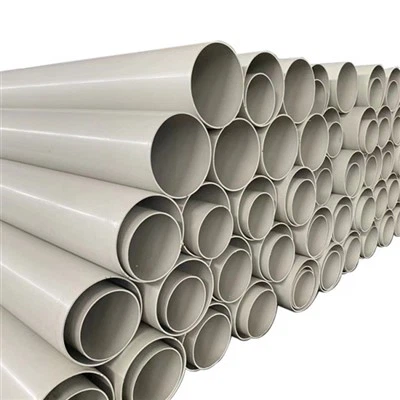
Hey there! As a supplier of conductive pipes, I've been getting a lot of questions lately about the diffusion properties of these pipes. So, I thought I'd take a moment to share some insights on this topic.
Let's start with the basics. Diffusion in conductive pipes refers to the movement of substances, such as gases or liquids, through the pipe walls. This can happen due to various factors, including concentration gradients, temperature differences, and the properties of the pipe material itself.
One of the key factors that affect diffusion in conductive pipes is the material of the pipe. Different materials have different diffusion coefficients, which tell us how easily substances can pass through them. For example, some plastics may have a higher diffusion rate compared to metals. This is because the molecular structure of plastics is more porous in some cases, allowing substances to move through more freely.
When it comes to our conductive pipes, we offer a variety of materials to suit different needs. Take our UV-resistant and Anti-aging Ductwork. This type of pipe is made from a special material that not only resists UV rays and aging but also has unique diffusion properties. The material is designed to minimize the diffusion of gases and liquids, which is crucial in applications where you don't want any leakage or contamination.
Another popular option is our PE Flame-retardant Pipe. Polyethylene (PE) is a widely used material in pipe manufacturing. Our flame-retardant version has been enhanced to have better diffusion resistance. The flame-retardant additives not only make the pipe safer but also affect its diffusion characteristics. They can create a more compact molecular structure, reducing the chances of substances diffusing through the pipe walls.
Then there's our PP Conductive Pipe. Polypropylene (PP) is known for its chemical resistance and durability. The conductive properties of this pipe are great for applications where static electricity needs to be dissipated. In terms of diffusion, PP has a relatively low diffusion rate for many common substances. This makes it a reliable choice when you need to transport fluids or gases without worrying too much about leakage.
Now, let's talk about how temperature affects diffusion in conductive pipes. Generally, as the temperature increases, the diffusion rate also goes up. This is because higher temperatures give molecules more energy to move around, making it easier for them to pass through the pipe walls. So, if you're using our pipes in a high-temperature environment, you need to take this into account. We've designed our pipes to handle a wide range of temperatures, but it's still important to be aware of how temperature can impact diffusion.


Concentration gradients also play a big role in diffusion. If there's a big difference in the concentration of a substance on the inside and outside of the pipe, the substance will tend to move from the area of high concentration to the area of low concentration. This is a natural process, and it's something we consider when designing our pipes. We want to make sure that our pipes can effectively control this movement and prevent any unwanted diffusion.
In addition to the material, temperature, and concentration gradients, the thickness of the pipe wall also affects diffusion. A thicker wall generally means less diffusion. Our pipes come in different wall thicknesses to meet different requirements. For applications where diffusion needs to be minimized, we can offer pipes with thicker walls.
When it comes to the applications of our conductive pipes, they are used in a wide range of industries. In the chemical industry, for example, our pipes are used to transport various chemicals. The diffusion properties of our pipes are crucial in this case to prevent any chemical leakage, which could be dangerous. In the electronics industry, our conductive pipes are used to dissipate static electricity and protect sensitive electronic components. The low diffusion rate of our pipes ensures that no unwanted substances can get in and damage the electronics.
If you're in the market for conductive pipes, you need to consider the diffusion properties carefully. Think about the substances you'll be transporting, the temperature and pressure conditions, and the environment where the pipes will be installed. Our team of experts is always here to help you choose the right pipe for your specific needs.
We understand that every customer has different requirements, and we're committed to providing the best solutions. Whether you need a pipe with high diffusion resistance or one that can handle extreme temperatures, we've got you covered.
So, if you're interested in learning more about our conductive pipes or have any questions about their diffusion properties, don't hesitate to reach out. We'd love to have a chat with you and discuss how our pipes can meet your needs. Let's work together to find the perfect solution for your project.
References
- Various industry research reports on pipe materials and diffusion properties
- Internal product development and testing data from our company's R & D department